
 EN
EN
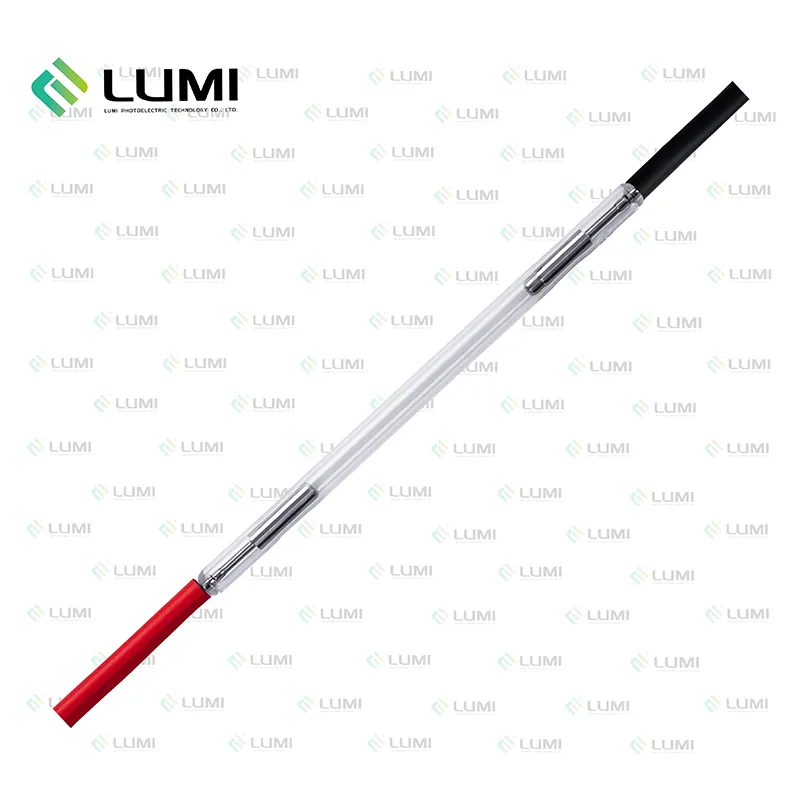
The Intense Pulsed Light (IPL) is a science that needs accuracy. Factors like wavelength and energy are essential; but time taken by every discharge of light or pulse width also known as pulse duration or pulse width is a master-control. This is the direct determinant of the safety, efficacy and comfort of a therapy. This parameter is controllable and thus the practitioners are very accurate when designing treatments. Lum Photoelectric technology co, ltd., our high performance IPL Lamps will be designed in such a way that they are able to give consistent and regulated pulses, such that clinicians are able to maximize on this most crucial variable and get the best patient results.
Knowing of the Role of Pulse Width in Hair Removal and Rejuvenation.
The principle of IPL therapy is called selective photothermolysis: it is aimed to kill a target by raising the temperature of the target rapidly without giving a chance of the adjacent tissues to heat the target and be destroyed. Of importance in this process is the length of the pulse.
In case of Hair Removal: The goal is the hair follicle. In cases where pulse duration is short (e.g. 5-30 milliseconds), it is conveyed fast. This heats the melanin in the follicle to destructive temperatures then heat is not permitted to escape to the surrounding skin. It suits best in fine hair and light skin.
With Skin Rejuvenation: This is generally the diffusion heating of the dermis that is typically mild to stimulate collagen. Pulse length (e.g. 30-100 milliseconds) Shorter pulse length will allow the heat to be spread throughout a wider tissue. This provides a more comfortable and natural thermal experience which is ideal in terms of overall tightning and texture improvement.
Influences on Collagen Stimulation and Pigment Targeting.
Pulse length is to be adjusted with regard to target:
Collagen Stimulation: Fibroblasts which are collagen producing cells are scattered throughout the dermis. Longer pulse is also a slight but consistent heating of the entire dermal layer, which, in fact, produces a diffuse regenerative effect, but no local injury.
Pigment Targeting: These are discrete pigmented lesions like sun spots that encompass small and discrete targets. A shorter pulse, in this instance, is more likely to be effective because it concentrates the thermal energy at the melanin cluster and thus breaks much faster with little heat being transduced to the skin around the area hence less post-inflammatory hyperpigmentation.
Pulse Duration vs. Safety and Comfort Trade off.
The pulse duration is one of the safety levers especially where the patient has a dark pigmentation.
The Concept of Thermal Relaxation Time (TRT): TRT is defined as the time needed to cool all the heat that had been added to an object to 50 percent. The TRT is a few milliseconds in the case of the epidermis (with melanin).
Safety in Darker Skin: It is necessary to employ longer pulse length than the epidermal TRT when dealing with darker skin types (Fitzpatrick IV-VI). The increased duration of pulse allows the epidermis that contains a high proportion of melanin to cool down in the process of energy transfer and this ensures that the epidermis does not overheat and burn away, but allows the deeper hair or blood vessel to warm effectively.
The Optimization of the device settings with reference to the skin types.
On this very reason, more advanced IPL tools can be adjusted to have a variable pulse length. A general guideline is:
Fair Skin (Fitzpatrick I-III): Can safely use shorter pulse times to obtain effective hair removal and pigment molecules.
Darker Skin (Fitzpatrick IV- VI): Requires a larger number of pulse intervals in order to cover the epidermis. Energy per pulse can also be reduced.
Fine vs. Coarse Hair: Coarse hair contains more mass and longer.
TRT which is prone to longer pulse times.
Short vs. Long Pulse Therapy Clinical Outcomes.
The clinical pictures have a considerable difference:
Short Pulse Outcomes:
Benefits: It has the benefit of having high efficacy as it employs fine hair and small pigments; the time of treatment is less.
Cs: Renewed risk of pain and adverse outcomes (burns, blisters) in case of incorrect targets or groups of skin.
Long Pulse Outcomes:
Advantages: Darker color and large targets are safe; more comfortable to the patient overall.
Cons: It can be ineffective when the energy is too diffused with very small discrete targets, and the times of the treatment can be larger.
Lastly, the pulse length is not one of those parameters that should be established and left alone. It is an active instrument and once effectively understood and applied, then the full potential of IPL technology is achieved. By settling on a device that includes a lamp of high caliber and can operate dependably and with diverse pulse widths, practitioners can be satisfied with customization of treatment and are not only efficient but phenomenally safe and comfortable to all kinds of patients irrespective of their skin-tone or their worry.