
 EN
EN
Introduction: Choosing the Right Light Source for Aesthetic Devices
Choosing the right light source is the main important thing in today's competitive beauty device market. Your choices has a big impact on how the machine will perform and how will your business operates. Xenon lamps and LEDs always being compared with each other, while they both produce light, they work in different ways and offer different benefits. At Lumi, we are producing a high-quality photoelectric components, that's why xenon lamps continues to be the top choice for core treatments in professional beauty equipment.
Understanding the Technology Behind Xenon and LED Lamps
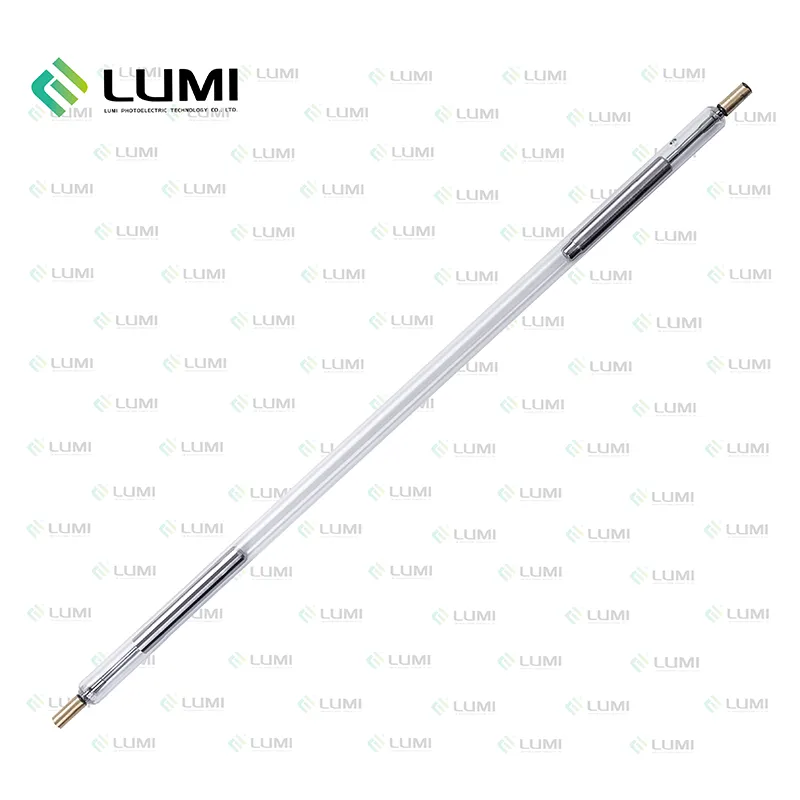
The main difference between xenon and LED lighting is on how they produces lights. Xenon lamps are gas discharge lamps, when a high-voltage current passes through ionized xenon gas inside the quartz tube, it creates a bright plasma arc that gives a full-spectrum light. This is the technology behind our IPL Lamps and Laser Xenon Lamps. On the other hand, LEDs are semiconductor devices, they produces light when electricity flows through a microchip, lighting up tiny semiconductors, and it usually had one color. This differences leads to major changes in how each type works.
Comparing Performance: Brightness, Lifespan, and Efficiency
When we usually compares the lamps and LEDs, we tend to look who is brighter, the lifespan, and efficiency. Xenon lamps are extremely bright that can produce high-pulse energy that reached into deep skin, and this makes them ideal for treatments like hair removal and skin rejuvenation. In addition, xenon lamps are consumable and need to be replaced after a certain number of pulses, and it also needed cooling systems but they are energy efficient. While LEDs are less powerful and are suited for surface-level treatments, it only produce small amount of lights, so devices needed multiple LEDs to cover different wavelengths, unlike xenon this last much longer and rarely need replacement, and LEDs run a cooler and are energy-efficient for visible lights, but they don't match xenon's power.
When to Use Xenon vs. LED in Treatments
In choosing the light source based we recommend the treatment goal. Xenon lamps are best for high-energy treatments that need deep penetration. For example, IPL hair removal and skin rejuvenation uses filtered xenon light to target hair follicles with enough heat to destroy them. Laser Xenon Lamps are also used to power medical lasers for surgery and aesthetic procedures. These are result-driven treatments that requires strong and reliable light. While LEDs are better for low-level surface treatments. They are working well for reducing inflammation, healing wounds, and stimulating collagen near the skin's surface. And the Blue LED light is also used to kill acne-causing problem. These treatments are more focused on gentle care.
Cost and Maintenance: What Beauty Professionals Should Know
Cost and maintenance are highly important for all businesses. And we know that xenon lamps is more expensive as it needed to be replaced most of the time, but the support they support high-value treatments that brings in more revenue. And to lower down the cost, it is important to choose reliable lamps from the trusted suppliers like Lumi and also follows the proper care to extend their lifespan. In contrast, LEDs have a lower overall cost because they last longer, however the devices can be expensive at first. Also, LED treatments tend to be less powerful and may not bring in as much income as procedures like permanent hair removal.
Tips for Getting the Most Out of Your Devices
The first thing that you need to do is to have a clear plan for your services, align it with the business that you have. If your business focuses on proven treatments like hair removal and vascular therapy, a xenon-powered IPL or laser system is needed. Always double check the product as sometimes market claims like "LED IPL", a true IP requires high-intensity , broad-spectrum pulsed light, which only xenon lamps can provide. Always make sure that you had a quality one as poor quality lamps can lead to a serious problem, more frequent replacements and unhappy customers.
Conclusion:
Every technology has its own purpose, and they are designed for different purposes. Just like Xenon Lamps and LEDs they are differ on how you were using them. By understanding how they are different with each other, you can choose the right tools that you'll be needing for your business, just always think of the result and the satisfaction it may give to your clients.