
 EN
EN
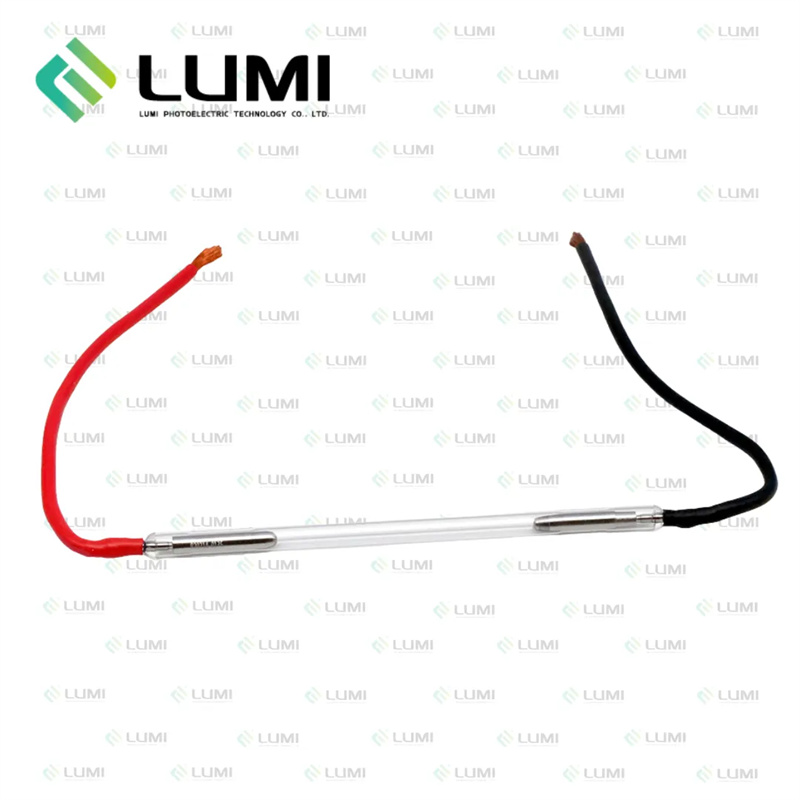
The efficiency of an Intense Pulsed Light (IPL) device is actually certainly not entirely specified through its own outside style or even software; it is essentially identified due to the unified combination of its own center component, the xenon blink light. Mismatched specifications can easily result in bad outcomes, gadget failing, as well as security dangers. At Lumi Photoelectric Technology Co., Ltd., our company believe that a deeper comprehending of lamp-machine harmony is actually the essential towards design exceptional visual gadgets. This direct describes the crucial actions for aligning xenon light specifications along with your IPL body style.
Understanding Key Parameters: Voltage, Current, and Arc Length
These three specifications type the fundamental plan of your lamp's efficiency:
Arc Length: The range in between the electrodes straight impacts the therapy area dimension as well as the electric resistance. A much longer arc needs a greater voltage towards strike as well as maintain the plasma arc however can easily light up a bigger location. A much shorter arc enables a much more focused, high-intensity area.
Voltage (V): The set off as well as running voltage identify if the light could be reliably fired up as well as just the amount of power is kept in the capacitors. The energy source should be actually developed towards provide a voltage rhythm that conveniently surpasses the lamp's striking voltage.
Current (I): The present stream with the plasma arc determines the strength as well as spectral qualities of the illumination outcome. The communication of voltage as well as present specifies the energy account of each rhythm.
Accurate command over these specifications in our IPL Lamps guarantees that the light runs as a foreseeable as well as steady element within the bigger electric body.
Optimizing Pulse Duration for Maximum Treatment Effectiveness
Rhythm period is a crucial therapy specification that should be actually matched towards the target's thermal relaxation time (TRT). The light as well as its own energy source should be actually crafted towards provide accurate, constant pulses.
Short Pulses (like 2-10 ms): Perfect for little, fast-heating aim ats such as great hair as well as melanin granules. They provide power quickly, ruining the aim at prior to warm can easily dissipate towards the bordering skin layer.
Long Pulses (like 10-100 ms): Utilized for bigger aim ats such as capillary or even for dealing with darker skin layer kinds. The slower power shipment carefully heats up the bigger aim at while enabling the bordering skin towards awesome, improving security.
The lamp's interior style as well as the chauffeur circuit should operate in show towards create steady, square-wave-like pulses without considerable degeneration or even flickering, a basic our team support in our Laser Xenon Lamp production.
Ensuring Device-Lamp Compatibility to Prevent Malfunctions
Requiring a light towards run in a body it had not been developed for is actually a main reason for early failing. Essential compatibility examinations consist of:
Electrical Impedance Matching: The lamp's resistance should suit the outcome qualities of the energy source. A mismatch can easily trigger "present sounding," which erodes electrodes as well as fractures the quartz movement pouch, resulting in devastating failing.
Thermal Management: The enormous warm produced due to the light should be actually efficiently dissipated. The device's cooling down body (whether sky or even water-cooled) should be actually sized towards manage the thermal tons of the particular light design to avoid getting too hot as well as outcome deterioration.
Mechanical & Optical Fit: The light should fit the reflector setting up completely towards guarantee ideal illumination compilation as well as a attire outcome beam of light account.
Adjusting Lamp Specs for Different Skin Types and Treatment Goals
Progressed IPL gadgets deal flexibility through enabling specification modifications, which are actually essentially modifications in exactly how the light is steered:
Fitzpatrick Skin Types I-III: Can easily generally endure greater fluences as well as much shorter rhythm periods for hair elimination as well as coloring.
Fitzpatrick Skin Types IV-VI: Need much a lot longer rhythm periods as well as reduced fluences towards securely aim at frameworks without jeopardizing skin trauma coming from extreme warm accumulation.
Vascular vs. Pigment Treatment: May require different spectral filtering (e.g., 515nm vs. 550nm cut-off filters) in conjunction with adjusted pulse parameters to optimize absorption by hemoglobin or melanin.
Case Studies: Successful Parameter Matching in Clinics
Case Study 1: High-Efficiency Hair Removal Device. A producer partnered along with Lumi to create a customized short-arc IPL Light along with a particular present thickness. Through coordinating this light towards a high-current, fast-discharge energy source, they accomplished an extremely brief, extreme rhythm ideal for targeting great hair roots. The outcome was actually a gadget popular for its own rate as well as effectiveness on low-grade hairs, providing it a considerable market benefit.
Case Study 2: Versatile Photorejuvenation System. Another customer required a solitary gadget towards deal with a wide variety of problems. Our team provided a light along with a somewhat much a lot longer arc size as well as enhanced its own range for broad-band discharge. Integrated along with an energy source efficient in providing a wide variety of rhythm periods (from 5ms towards 50ms), the resulting device might securely as well as efficiently deal with whatever coming from vascular sores on reasonable skin layer towards coloring on darker skin layer kinds, showing the energy of accurate specification coordinating.
Through dealing with the xenon light certainly not as a product however as the center of your IPL body, you can easily open brand-brand new degrees of efficiency, security, as well as market excellence.
Table of Contents
- Understanding Key Parameters: Voltage, Current, and Arc Length
- Optimizing Pulse Duration for Maximum Treatment Effectiveness
- Ensuring Device-Lamp Compatibility to Prevent Malfunctions
- Adjusting Lamp Specs for Different Skin Types and Treatment Goals
- Case Studies: Successful Parameter Matching in Clinics