
 EN
EN
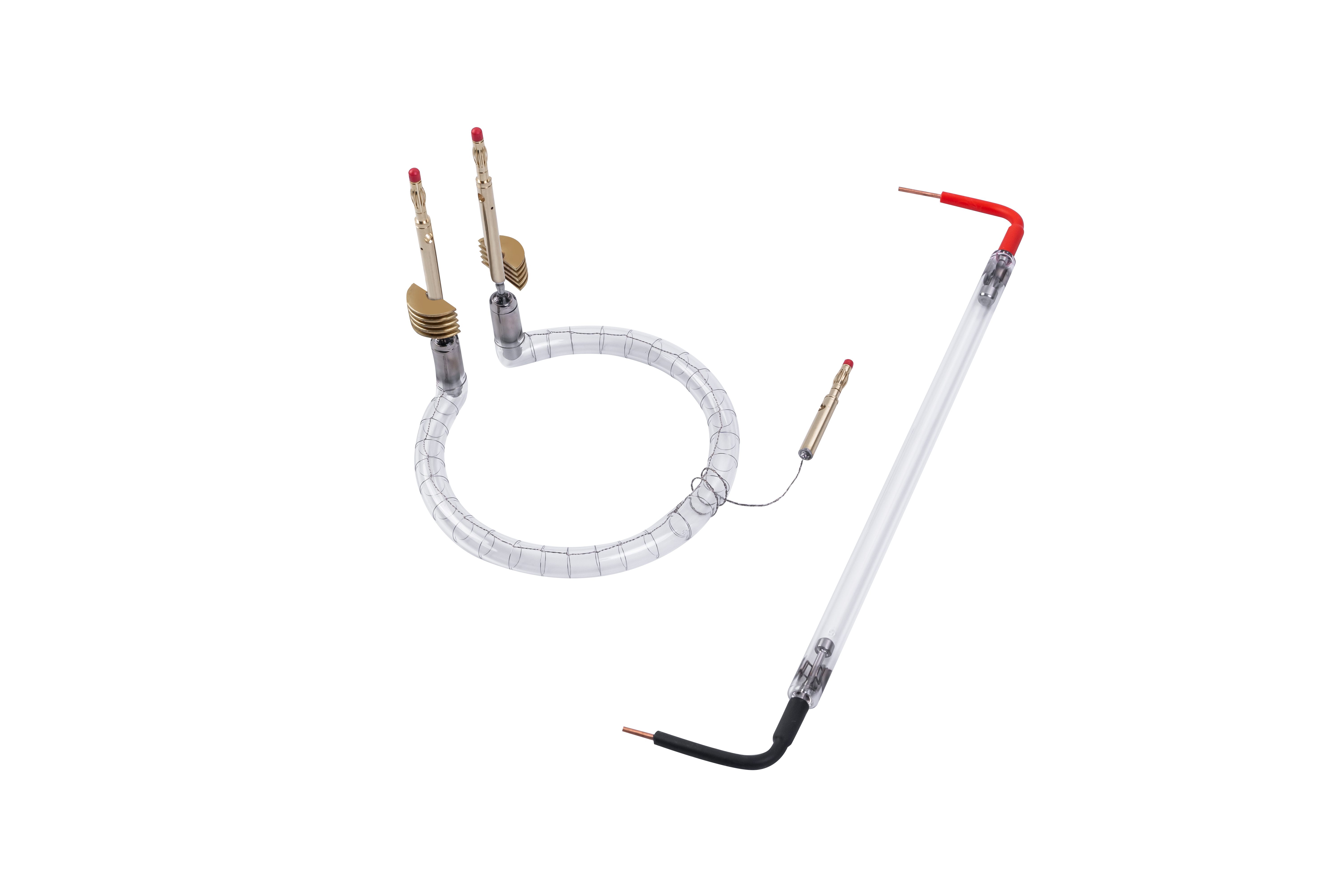
In aesthetic equipment, medical equipment and industrial test, the xenon flash lamps are a staple of high-performance light sources, providing intense and stable and broadband light that drives high-critical uses. The mystery of their superior performance is a refined array of highly optimized components and a mastery of the technical fundamentals--all of which are tuned to turn electrical energy into intense pulsed light which is the essence of their worth. Lumi Photoelectric Technology Co., Ltd. as a well known producer of high quality laser lamps and special light sources in Nanjing has perfected the design, production and optimization of xenon flash lamp elements with decades of experience in terms of reliability, transparency and performance excellence. This blog explores the building blocks behind xenon flash lamps, their respective functions, the technical principles behind their operation, and how Lumi has invested in precision to take the individual elements to high standards to satisfy the high standards of the global aesthetic and industrial markets.
A xenon flash lamp is not a unitary, and monolithic unit but a system of parts that have significant role to play in defining how the lamp performs, its life span and appropriateness to the application. There is also no need to use conventional sources of light, based on incandescent or LED semiconductors, which are instead replaced with xenon flash lamps, which, unlike conventional sources, also needs the fine-tuning of parts to maintain safety, stability, and efficiency. Knowledge of these elements in relation to each other is crucial to firms involved in the production of aesthetic equipment because it allows them to make informed decisions on both the choice of components, how they integrate in the machine, and how to optimize its performance.
Core Components of Xenon Flash Lamps: Structure and Function
All good quality xenon flash lights incorporate five major elements all designed to be able to endure harsh environments (high voltage, high temperature, and high turnover of energy), and at the same time provide homogeneity in performance. Lumi rigid production standards allow producing every part to medical and industrial quality standards, thus assuring reliability even with the long-term high-volume use.
1. Quartz Glass Tube: The Light-Transmitting Core
The xenon flash lamp consists of the quartz glass tube which is the outermost enclosure, which is a container that holds the xenon gas as well as a medium through which the light will flow. Not like common glass, quartz glass is chosen due to its remarkable qualities: extreme light (transmittance up to 95% in the visible and the near-infrared spectrum) and extreme heat (capable of enduring temperatures up to 1700C) with thermal shock resistance. These attributes are imperative because the ionization of the xenon gas causes strong heat and pressure to be produced inside the tube- any structural deficiency in the glass would cause early breakdown.
In our Lumi tubes we employ very pure synthetic quartz glass that is used to construct flash lamps so that the loss of light is minimal and that the tubes last as long as possible. Its thickness and inner diameter are also delicately engineered depending on the desired use of the lamp: the larger the diameter, the higher the power of the lamp used and vice versa. Another trick is to polish the inside surface of the tube to minimize light scattering, which again increases luminance and spectral consistency.
2. Xenon Gas: The Light-Generating Medium
The Xenon gas, a noble gas that has some peculiar atomic characteristics, is the nucleus of the operation of the flash lamp in generating light. Xenon, in contrast with other noble gases (c.f. argon or krypton), is highly atomic and its ionization energy is high because of which it can accumulate and pass on large quantities of energy, in response to high-voltage pulses. The performance of the lamp depends on the purity of the xenon gas- impurities (oxygen or moisture) may lower the light output, decrease the lifespan of the lamp and make the arc unstable.
In all our flash lamps Lumi wipes the high-purity xenon gas to the highest level of purity (99.999) to remove contaminants. A known amount of the gas is contained in the quartz tube with a known pressure (usually 1-5 atmospheres) with the balance established to give a balance between light intensity and lamp life. The increased pressure will provide more light production, though with a reduced tube life, and the reduced pressure will provide increased tube life, at the expense of luminance, which in turn is engineered by our engineering team depending on the lamps intended purpose.
3. Electrodes: The Ignition and Energy Conduction Core
Electrodes play a fundamental role and upon which the ionization process initiates, and through which electrical energy flows into the xenon gases. Electrodes are usually composed of high-purity tungsten (or tungsten alloys), and are formed so that they conform to a certain geometry to produce consistent arc formation and reduce wear. There are two electrodes (one anode and one cathode) at opposite ends of the quartz tube that make up each flash lamp, the tips of which are aligned to form a focused plasma arc.
Cathode especially is designed to withstand high temperatures and emission of electrons during ignition process. The electrodes used by Lumi are laminated with a rare-earth element (thorium or cerium) to improve the emission of electrons, minimizing the ignition voltage, and stability of the arc. Moreover, the electrode tips are also ground to a fine point to give a concentrated arc that provides the same light output with every pulse. This detail reduces electrode erosion, and the lamp lasts as long as 30 percent longer than other electrodes.
4. Seals: The Leak-Proof Barrier
Seals are needed to preserve the vacuum-tight environment necessary to help the xenon gas to work. Any single leakage may cause air or moisture to leak into the tube and contaminate the xenon gas, leading to the lamp breaking. Lumi employs high temperature glass to metal seals, which 'lock' the quartz tube to the electrode leads resulting in a hermetic seal that survives the high and low temperature cycles of operation in a flash lamp.
Our seals are produced with a proprietary process that guarantees a uniform bonding and zero leakage. All seals are carefully tested on helium leak prior to assembly, to ensure that the xenon is maintained pure and within the seal until the lamp exhausts its usage. This type of accuracy is paramount to aesthetic devices, where a small leak may jeopardize treatment efficacy and safety.
5. Trigger Electrode (Optional): Enhancing Ignition Reliability
Whereas simple xenon flash lamps use high-voltage linkage applied directly to active electrodes, numerous high-performance designs (such as those employed with professional aesthetic devices) have a trigger electrode. This auxiliary electrode is wound about the outside of the quartz tube where it impulses a small fraction of the xenon gas, to ionize and trigger the main arc between the anode and cathode.
The trigger electrode enhances reliability of ignition, particularly at lower temperature or when the lamp is operated in high frequency applications (e.g. IPL hair removal systems). The trigger electrodes in Lumi ensure quick and reliable ignition, which is essential in aesthetic treatments where accuracy and reproducibility of light pulses are necessary, thus Lumi have transferable electrodes that are designed to minimize electrical interference.
Technical Principles: How Xenon Flash Lamps Generate Light
The principle that lies behind the operation of a xenon flash lamp relies on ionizing gas and producing a plasma arc- a process that converts electrical energy into light energy within the space of a few micro seconds. This can be divided into four major steps governed by the basic principles of physics:
1. Charging Stage
Capacitor bank (part of the host device) is charged with a high voltage (usually 1kV-10 kV) before ignition. This capacitor contains electrical energy, which will later be passed to the flash lamp, providing a high speed concentrated pulse of energy.
2. Ignition Stage
Once the trigger signal is sent out (through the trigger electrode or by simply attaching a high-voltage pulse to the electrodes), a high-voltage pulse is triggered through the electrodes. This pulse ionizes the xenon gas molecules, denuding the atoms of electrons to form a plasma, a high-temperature, ionized gas, and one that allows current to be passed through it.
3. Arc Formation and Light Emission Stage
After the formation of the plasma, the capacitor energy is released by the arc of plasma. The xenon atoms get excited to a greater energy state by colliding with the electrons in the plasma. As these excited atoms settle back to their ground state they emit energy in the form of light, a broad-spectrum of light, 400nm (ultraviolet) to 1200nm (near-infrared) that is perfect in aesthetic applications.
4. Extinction and Cooling Stage
The energy pulse can then be discharged (usually within in 1-100 microseconds), and the arc can then be suppressed because the energy in the plasma decays extremely fast. The lamp is now put back into an idle position containing the next pulse. The heating strength of the quartz tube and the cooling system of the lamp (built-in with the host device) are such that the lamp will not overheat when applied in numbers of successive cycles.
Lumi’s Technical Advantages: Optimizing Components for Performance
At Lumi, we specialize in maximizing every aspect of the xenon flash lamp to perform in unison with the rest, resulting in better performance, reliability and lifespan of the lamp. The skilled engineering department relies on sophisticated simulation tools to produce components that reduce energy usage, ensure greater arc stability and less wear, all to the unique requirements of the manufacturers of aesthetic equipment.
What makes each lamp to our exhaustive tests is that all parts are tested, including quartz tube transmittance, electrode life and performance and so on. We also provide the complete customization of our component solutions, in that is, the size of the quartz tube, the material of the electrode, and the pressure of the xenon gas, wherein the size of the quartz tube, the electrode material and the pressure of the xenon gas is determined to fit the specific needs of a particular aesthetic device: be it a small home-held hair-removal device or a professional skin-rejuven
We take our precision and technical excellence seriously as we offer extensive after sales warranty in the form of training to maintenance of the components, frequent check ups and the replacement of the parts on time. This also helps guarantee our clientele of the devices they utilize are running at peak performance resulting in less down time and more satisfied customers.
Conclusion
The xenon flash lamps exemplify the strength of precise engineering - every part, including the quartz tube, and electrodes are very important in providing the intense, consistent light that drives the aesthetics devices of today. Knowledge of the parts and technological concepts of xenon flash Lamps is crucial to manufacturers who wish to come up with instruments of high performance and reliability that will be unique in the international market.
Lumi Photoelectric Technology Co., Ltd. has decades of experience in special light source manufacturing coupled with rigorous production processes and allows us to conceive xenon flash lamps that surpass industry standards. With regard to the quality of the components, technical optimization and draw around the customer, it makes sure that our customers not only get a product but also an actual reliable solution that improves the performance of their aesthetic equipment.
And, whether it is an elaborate professional-level system, or a home-based much smaller unit, Lumi xenon flash lamps, made with accuracy parts and based on proven technical concepts, are developed to fit your specific requirements. Get in touch with us and browse on the details of our components, technical features and custom solutions today.